Climate Change:
A Reality We Can No Longer Ignore Climate change is no longer something we read about in textbooks or hear in science documentaries—it’s happening around us every single day. Whether we notice it or not, the world’s weather patterns, temperatures, and natural systems are shifting, and the signs are becoming harder to overlook. —
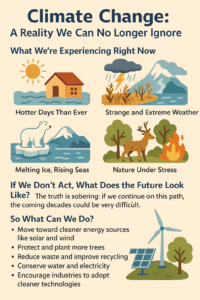
What We’re Experiencing Right Now When we talk about climate change, it’s easy to imagine something far away. But its effects are already here: Hotter Days Than Ever Every summer feels a bit hotter than the last. Heatwaves that once came rarely are now becoming common, making outdoor life uncomfortable and sometimes even dangerous. Strange and Extreme Weather Floods where it never used to flood… Droughts where crops once grew easily…
Storms that are stronger than anything we remember from childhood… These are not coincidences. Our climate system is reacting to decades of pollution and environmental neglect. Melting Ice, Rising Seas From the Arctic to mountain glaciers, ice is disappearing at a worrying pace. This isn’t only about polar bears—it’s about rising sea levels threatening millions of people living in coastal regions. Nature Under Stress Animals are losing their habitats, oceans are warming, forests are burning, and many species are struggling to survive. The balance of nature that once seemed permanent is shifting fast. Food and Water Challenges Changing rainfall patterns and unpredictable seasons affect everything—from the food farmers grow to the water flowing in rivers. Many regions face water shortages, and the risks to food security are rising. —
If We Don’t Act, What Does the Future Look Like? The truth is sobering: if we continue on this path, the coming decades could be very difficult. Some places may become too hot to live in. More people might be forced to leave their homes because of floods, droughts, or storms. Health problems linked to heat, air pollution, and infected water may increase. Economies could struggle as agriculture, fisheries, and even tourism suffer. Some ecosystems might be damaged beyond repair. This isn’t a prediction meant to scare anyone—it’s a warning backed by global scientific evidence. — So What Can We Do? The good news is that change is still possible. We’re not helpless. Small and big actions both matter. Here are some real steps societies can take: Move toward cleaner energy sources like solar and wind. Protect and plant more trees. Reduce waste and improve recycling. Conserve water and electricity. Encourage industries to adopt cleaner technologies. Educate families, children, and communities about environmental care. Every positive choice adds up. —
Questions for You: How Do You Think We Can Heal Our Planet? To truly solve this crisis, everyone’s voice and effort count. Here are some questions to reflect on: 1. What is one small change you can make in your daily routine to help the environment? 2. Do you believe your government is taking climate change seriously enough? If not, what should they improve? 3. How can schools, homes, and communities raise awareness about climate protection? 4. Which clean or renewable energy sources do you think should be used more in the future? 5. What can industries do to reduce pollution without harming the economy? 6. What kind of world do you hope future generations will inherit?
